








GCC Unified Tourist Visa 2026: The Definitive Guide for UK Residents & British Citizens
February 9, 2026Top 10 Mistakes that cause visa rejection in Gulf Countries (2026)

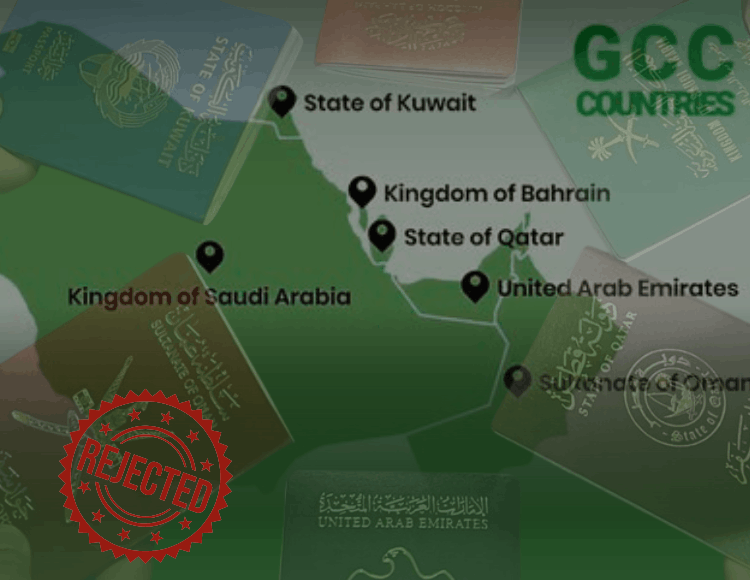
Visa adjudication across GCC countries has entered a new era in 2026, defined by digital precision, automated validation, and zero tolerance for inconsistencies.
Across the UAE, Saudi Arabia, Qatar, Kuwait, Bahrain, and Oman, immigration systems are now deeply integrated with labor platforms, sponsor registries, and centralized compliance databases, significantly narrowing the margin for administrative error.
Today, visa rejection is rarely about eligibility alone. It is determined by documentation integrity, classification accuracy, and regulatory alignment.
Below are the top 10 mistakes that continue to cause visa rejection in Gulf countries in 2026.
1. Identity Inconsistencies Across Documents
Inconsistencies in personal data remain one of the most common grounds for rejection. These include:
Variations in name spelling
Differences in passport numbers
Date of birth discrepancies
Transliteration inconsistencies
Mismatch between passport and supporting documents
Modern GCC immigration systems cross-reference data across multiple fields. Even minor discrepancies can result in automated rejection without discretionary review.
2. Incorrect Visa Category Selection
Selecting an inappropriate visa type relative to the intended purpose of travel frequently results in refusal.
Common misalignments include:
Applying for a tourist visa while intending to undertake commercial activity
Submitting a business visit application where employment is anticipated
Using short-term entry routes for long-term project deployment
Authorities across the GCC increasingly align declared purpose, sponsor activity, and visa classification, making incorrect route selection a high-risk error.
3. Incomplete or Inaccurate Application Forms
Applications are routinely declined due to:
Missing mandatory information
Inaccurate sponsor or employer details
Inconsistent travel history declarations
Incorrect employment or marital status information
Digital immigration portals across the region perform automated checks. Incomplete submissions are frequently rejected at the validation stage.
4. Non-Compliant or Low-Quality Document Submissions
Document quality is a decisive factor in 2026 visa processing. Rejections often arise from:
Blurred or low-resolution passport scans
Cropped document edges
Improperly formatted photographs
Illegible stamps or signatures
Compressed mobile image uploads
Automated systems rely on clear, full-page, high-resolution uploads. Technical deficiencies are often interpreted as non-compliance.
5. Insufficient Passport Validity
Most GCC countries require a minimum passport validity—commonly six months beyond the intended entry date. Applications submitted with insufficient validity, damaged passport pages, or near-expiry documents are frequently declined.
Despite being preventable, passport validity remains a recurring rejection factor.
6. Sponsor or Employer Documentation Discrepancies
Many Gulf visa categories operate under sponsor-based frameworks. Rejection risks increase when:
Trade license details are inconsistent
Company registration numbers differ across documents
Authorization letters are incomplete
Signatory information lacks clarity
As employer compliance oversight intensifies in 2026, sponsor misalignment is increasingly scrutinized.
7. Job Title and Professional Classification Misalignment
Workforce governance reforms—particularly in jurisdictions such as Saudi Arabia—have heightened oversight of professional classifications and foreign employment quotas.
Visa refusals may occur where:
Employment contracts reflect titles that differ from authorized classifications
Academic qualifications do not substantiate the stated profession
Experience documentation conflicts with declared occupation
Digital labor platforms now cross-check professional categories against official records, reducing flexibility in classification discrepancies.
8. Inconsistent Financial Documentation (Visit & Business Routes)
For business and visit visas, financial transparency remains a core assessment criterion.
Rejections may arise where:
Bank statements conflict with declared income
Salary certificates and employment letters lack consistency
Financial capacity does not support stated travel purpose
Authorities increasingly evaluate financial credibility as part of overall risk assessment.
9. Unresolved Immigration History
Prior immigration non-compliance can result in immediate refusal. This includes:
Previous overstays
Absconding records
Unresolved visa cancellations
Existing travel bans
GCC immigration databases retain historical records, and system flags are applied automatically during new submissions.
10. Missing Medical, Insurance, or Regulatory Compliance Documentation
For employment and long-term residence categories, mandatory documentation such as:
Approved medical examination reports
Health insurance certificates
Labor compliance confirmations
must be submitted in the prescribed format. Missing or incorrectly prepared compliance documents often result in rejection or suspension.
Why GCC Visa Screening Feels Stricter in 2026
Across the GCC, authorities and employers are increasingly relying on digital platforms for verification and enforcing stricter job and contract governance. In Saudi Arabia, for instance, work permissions are now managed through official platforms such as Qiwah, with reforms placing greater emphasis on accurate, fully verified employment records.
The result: even minor discrepancies are detected more easily and carry far greater consequences than before.
2026 Regulatory Landscape: Structural Tightening of Controls
The GCC continues to implement labor reforms, digitized immigration frameworks, and integrated sponsor accountability mechanisms. The region remains one of the largest expatriate labor markets globally, and authorities are focused on:
Data integrity and consistency
Accurate professional classification
Sponsor transparency
Automated document validation
Risk-based screening models
As a result, visa adjudication has become increasingly standardized, with minimal tolerance for administrative error.
2026 “Fast Prevention” Checklist
(use before every submission)
- Exact identity match (passport MRZ spelling, DOB, passport number)
Correct visa category for purpose
Clear scans + compliant photos (no cropping, no compression)
Passport validity ≥ 6 months (best practice)
Sponsor/employer documents aligned and complete
Job title consistency (contract ↔ authorization ↔ evidence)
Financial documents consistent and recent (where required)
Prior immigration issues resolved and declared correctly
Medical/insurance/compliance documents completed correctly (route-based)
Final review by a second checker before upload/submit
How Saudi and Gulf Visa Services helps clients avoid GCC visa rejection
Most visa refusals are not due to ineligibility but because applications are prepared document by document rather than structured case by case.
GCC authorities now review applications holistically, considering identity, sponsor alignment, labor classification, financial credibility, and regulatory compliance. Even minor discrepancies can cause delays or refusals.
At Saudi and Gulf Visa, we combine regulatory intelligence with procedural precision to ensure every application is accurate, credible, and approval-ready.
When outcomes matter, expertise makes the difference.
Saudi and Gulf Visa. Where Compliance Meets Certainty.