








Remote Work, Freelancing, and Relocation Options for Tech Professionals in Saudi Arabia
May 22, 2026
Saudi Work Visa Medical Failures 2026: Why Some Applicants Do Not Pass Clearance
June 1, 2026
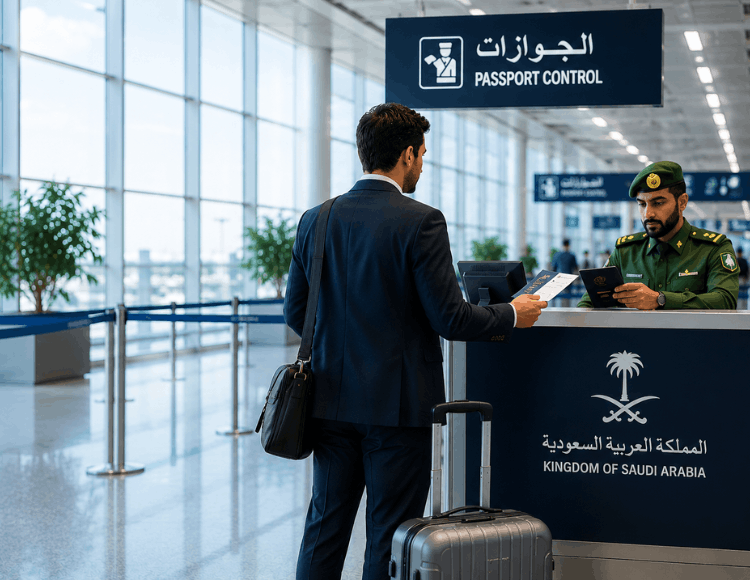
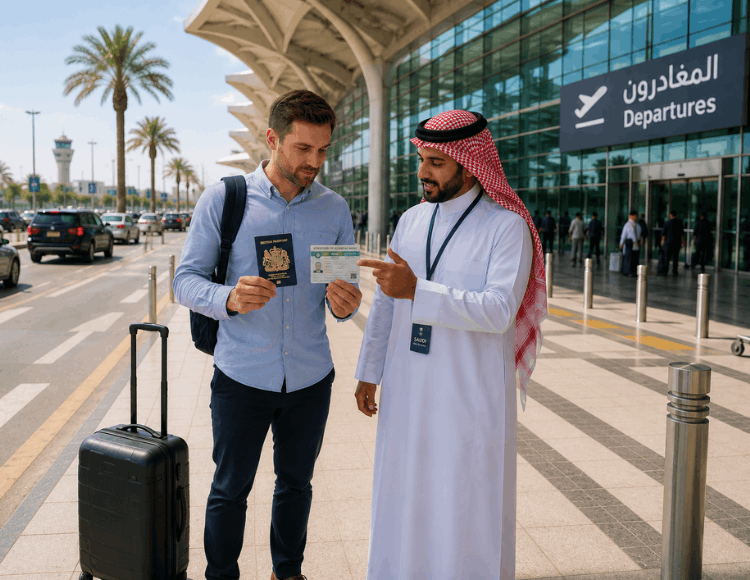
Saudi Airport Immigration Checks in 2026: Why Some Travellers Face Closer Inspection
For many years, travellers entering Saudi Arabia often viewed airport immigration as a routine checkpoint following visa approval. In 2026, that environment is becoming far more structured.
As Saudi Arabia continues advancing large-scale investment programmes, infrastructure development, tourism expansion, and regional commercial growth under Vision 2030, international arrivals into the Kingdom have increased significantly. Alongside this expansion, airport-side immigration procedures are evolving to manage far more dynamic travel activity entering Saudi Arabia.
For some travellers, that shift is becoming visible through more detailed inspection during arrival procedures across major Saudi airports.
Importantly, these interactions do not automatically indicate violations or denied entry. In many situations, they reflect the growing complexity surrounding modern cross-border mobility into the Kingdom.
Rising International Movement Is Reshaping Arrival Procedures
Saudi Arabia’s economic transformation has expanded both the scale and diversity of passengers entering the Kingdom. Government initiatives linked to investment, logistics, construction, tourism, technology, and multinational expansion have increased the movement of executives, project teams, regional leadership, investors, and international business visitors across Saudi Arabia.
This shift has naturally intensified pressure across airport immigration environments. As a result, arrival procedures are placing greater emphasis on whether a traveller’s stated purpose aligns clearly with the structure and timing of the visit taking place inside the Kingdom.
Additional Airport Questioning Is Often Linked to Travel Context
Where additional questioning occurs, immigration officers may seek clarification regarding:
- Destination within Saudi Arabia.
- Duration of stay.
- Accommodation arrangements.
- Company relationships.
- Meeting schedules.
- Itinerary structure.
In many cases, these discussions remain brief and procedural.
However, where travel details appear layered, fragmented, or difficult to interpret quickly, authorities may request further clarification before completing arrival processing.
This is particularly relevant where schedules involve:
- Multiple Saudi cities.
- OVerlapping regional engagements.
- Tightly sequenced movement across GCC markets.
Repeated Entry Patterns Are Receiving Closer Review
One of the clearest developments emerging in 2026 involves concentrated short-term travel into Saudi Arabia over recurring periods.
This may include travellers who:
- Enter frequently within short time frames.
- Maintain continuous regional schedules.
- Spend prolonged periods inside the Kingdom repeatedly.
- Move regularly between Gulf jurisdictions for professional activity.
While these patterns are often commercially legitimate, they can still prompt closer review at airport checkpoints due to the scale and sequencing of travel involved.
As Saudi Arabia strengthens its position as a regional business hub, high-frequency arrival activity is becoming more visible than in previous years.
Travel Timing Is Playing a Larger Role During Arrival Procedures
In some situations, travel timing itself can influence airport-side verification.
Closely sequenced entries, compressed project schedules, overlapping regional commitments, or repeated short-duration visits across GCC markets may require travellers to explain the structure and purpose of travel more clearly upon arrival.
This becomes more noticeable during periods of elevated business activity, where airport authorities are managing substantially higher passenger volumes within shorter processing windows.
For organisations coordinating regional mobility, travel sequencing is becoming a more important component of overall movement planning.
Airport-Side Assessments Are Becoming More Analytical
Saudi airport immigration procedures are moving beyond traditional document inspection alone.
Authorities are now more likely to assess whether a traveller’s overall profile presents a coherent and understandable purpose at the point of arrival. This can involve reviewing sequencing of visits, duration patterns, supporting itinerary details, movement history, and alignment between declared activity and observed travel behaviour.
In practice, airport-side assessments are becoming more analytical rather than purely administrative.
Arrival Preparation Now Extends Beyond Visa Issuance
Travellers entering Saudi Arabia are increasingly expected to present supporting travel details clearly when requested during airport procedures.
In practice, incomplete itinerary information, inconsistent scheduling details, or unclear accommodation arrangements can sometimes prolong arrival-side verification unnecessarily.
Where requested, travellers may benefit from having hotel confirmations, return travel details, meeting schedules, local contact information, and company details readily accessible during arrival processing.
For businesses coordinating workforce mobility into Saudi Arabia, preparation now extends beyond visa issuance alone.
Regional GCC Mobility Is Creating More Complex Arrival Profiles
Corporate activity across the Gulf has become significantly more interconnected. Businesses now routinely operate between Riyadh, Dubai, Doha, Manama, and other major regional centres simultaneously.
This has created more dynamic movement patterns across GCC markets than in previous years. For immigration authorities, continuous regional movement can sometimes require additional clarification regarding organisational relationships, professional responsibilities, duration of activity, and sequencing across multiple jurisdictions.
As a result, travellers operating across several Gulf markets may experience more detailed airport-side review than occasional visitors entering Saudi Arabia for isolated trips.
Major Events Are Increasing Airport Processing Pressure
Saudi Arabia’s expanding calendar of investment summits, international exhibitions, technology forums, infrastructure conferences, sporting tournaments, and entertainment initiatives is contributing to substantially higher passenger volumes entering the Kingdom throughout the year.
During major event periods, airport immigration environments often manage significantly greater intensity within compressed arrival windows. As travel flows become denser around large-scale regional events, airport-side verification naturally becomes more detailed in order to maintain efficient border processing and movement oversight.
Saudi Arabia’s Arrival Environment Is Evolving Alongside Economic Growth
Saudi Arabia’s airport immigration environment is evolving at the same pace as the Kingdom’s wider economic transformation.
As international investment, infrastructure programmes, tourism activity, and regional corporate operations continue expanding, arrival procedures are becoming more aligned with the scale and complexity of modern cross-border mobility.
For many organisations, mobility risk in 2026 is no longer limited to visa approval itself. Traveller behaviour, travel sequencing, and movement coordination are now becoming equally important parts of successful entry into Saudi Arabia.
For travellers and organisations alike, successful arrival into the Kingdom now depends heavily on preparation, organisation, and clearly structured travel activity before departure.
Saudi & Gulf Visa Services supports businesses and international travellers with Saudi visa processing, regional mobility coordination, travel planning, and operational immigration support across Saudi Arabia and the wider GCC region.