Beyond Temporary Projects: The Quiet Evolution of Workforce Models
Most organisations do not intentionally establish a long-term workforce in Saudi Arabia. If asked, many would still describe their operations as supporting a temporary project.
That may be commercially accurate. Operationally, however, projects are extended, experienced teams remain in place, and workforce deployment gradually supports ongoing business activity rather than a single assignment.
Because the project, client and commercial objective often remain unchanged, the transition is easy to overlook.
Long before anyone recognises it, the organisation has already changed.
Operational Change Is Usually Invisible Before It Is Intentional
Significant operational change rarely begins with strategy. It develops through practical business decisions, such as retaining experienced specialists, reusing established teams, and building future work around existing capability.
None of these decisions is intended to reshape the organisation. Together, they do exactly that.
Delivery Changes Before Structure Does
The first visible change rarely appears in organisational structure. It appears in the way work is delivered. Teams move between assignments, existing capability supports new work, and operational knowledge is retained instead of being recreated.
The language remains project-based. The operating reality does not.
Leadership Begins Planning Beyond the Current Project
As delivery becomes more established, leadership priorities shift from mobilising people for the next assignment to retaining capability for future demand.
When leadership starts planning for capability instead of replacement, the operating model has already moved beyond temporary deployment.
Capability Starts Generating Its Own Value
Unlike projects, capability does not end when delivery is complete. It accumulates with every successful deployment. Retained specialists improve delivery consistency, organisational knowledge deepens, and each assignment strengthens readiness for future opportunities.
Competitive advantage is no longer defined solely by mobilisation speed. It increasingly depends on the capability already in place before the next opportunity emerges.
The Business Stops Starting Again
One of the clearest indications that an organisation has evolved is that new projects no longer require a new workforce model.
Established teams become the starting point rather than the outcome of mobilisation. Operational knowledge is carried forward instead of rebuilt. Existing capability supports future work before additional resources are even considered.
This is often the point at which organisations discover they have been building an operating model rather than simply delivering projects.
How Saudi and Gulf Visa Services Can Help
As organisations expand in Saudi Arabia, workforce planning increasingly becomes part of broader operational planning.
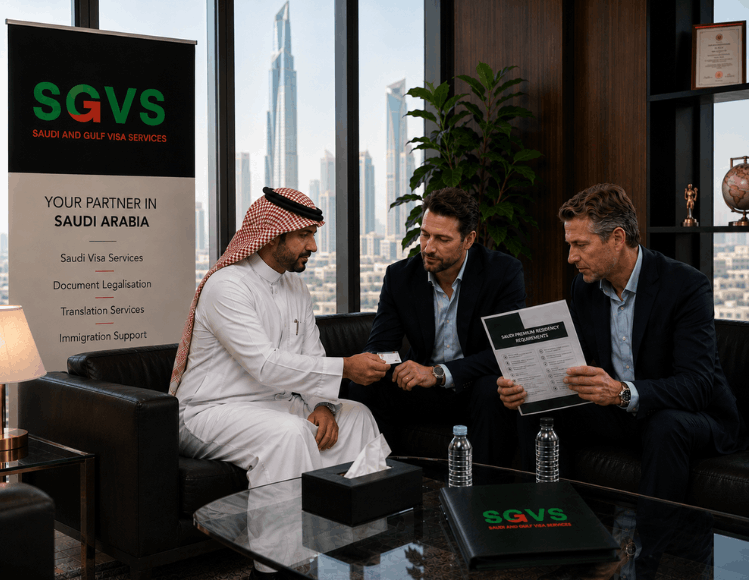
Saudi and Gulf Visa Services helps UK employers align workforce planning with changing delivery models as temporary deployments become an enduring part of business operations.
This helps organisations preserve capability, strengthen continuity and support sustainable growth across the Kingdom.
FAQs
Does extending a project automatically mean the workforce model has changed? No. The key consideration is whether capability is being retained and redeployed beyond a single assignment.
Why is this transition often overlooked? Because it develops through incremental operational decisions rather than a single strategic event.
Why does recognising it matter? It enables organisations to retain capability, strengthen continuity, and prepare more effectively for long-term growth.
Conclusion
Workforce models rarely change because organisations decide to operate differently.
They change because practical business decisions gradually become the organisation’s normal way of operating.
Projects rarely become permanent. Workforce models often do.
Organisations that recognise this transition early are better positioned to build capability instead of repeatedly recreating it.
Over time, that distinction becomes one of the defining characteristics of a mature operating model.