Do AI Professionals Need Arabic or Certifications for Saudi High Skilled Visas in 2026?”
Saudi Arabia is no longer just attracting AI talent, it is becoming increasingly selective in how that talent is evaluated. With artificial intelligence at the centre of Vision 2030, the Kingdom is investing heavily in data, automation, and emerging technologies. This shift is driving rapid expansion across major initiatives like NEOM and national AI programmes, drawing skilled professionals from around the world. As a result, the question “Do AI Professionals Need Arabic or Certifications for Saudi High Skilled Visas in 2026?” has become more relevant than ever for those considering opportunities in the Kingdom.
At the same time, the visa framework has evolved into a more structured and precise system. The focus is no longer just on qualifications alone, but on how well your profile fits within a digitally driven process. While the straightforward answer is that Arabic language skills and certifications are not mandatory, the reality is more layered. Understanding how the system evaluates candidates in practice is what ultimately determines how smooth and successful your application will be.
How the Visa System Operates in 2026
Saudi Arabia’s visa framework now functions through an integrated digital environment where multiple elements are assessed together. Your job role, salary level, qualifications, and your employer’s compliance status are reviewed across platforms such as Qiwa and Muqeem.
A defining feature of this system is continuous validation. Employment contracts are digitally registered, workforce data is actively monitored, and visa eligibility is tied to compliance indicators such as Saudization levels. This creates a process where accuracy is essential, as inconsistencies between any of these elements can interrupt or delay progress.
Arabic Language Skills in the Saudi AI Market
Arabic proficiency is not required for visa approval. AI roles in Saudi Arabia are largely based in English speaking environments, particularly within multinational companies, technical teams, and research driven organisations.
However, language becomes relevant once you are operating within the market. Arabic can strengthen communication with local stakeholders, support collaboration in government linked environments, and contribute to long term career growth. While it does not influence eligibility, it can enhance how effectively you integrate and progress.
The Role of Certifications for AI Professionals
There is no mandatory certification required to qualify for a Saudi high skilled visa. The core criteria remain consistent, a relevant academic background, proven professional experience, and a role that aligns with your expertise.
Certifications can, however, strengthen how your profile is positioned. In AI roles where responsibilities may span multiple domains, recognised credentials help define your specialisation and support accurate classification within the system. They also provide employers with additional confidence when assessing candidates for sponsorship or high skilled roles.
What Determines Approval in Practice
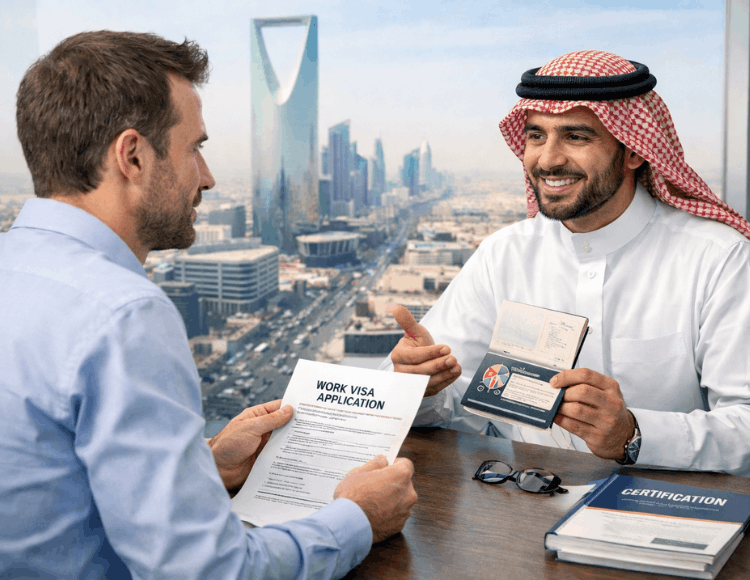
Visa approval in 2026 is driven by how well key elements of your profile align within the system. This includes ensuring that your job title reflects your actual responsibilities, your salary corresponds with the appropriate classification, and your qualifications are fully verified and recognised.
Document sequencing is also critical. Educational certificates must be correctly attested and validated before submission, as errors at this stage can affect subsequent steps. The process operates as a connected workflow, where each stage depends on the accuracy of the previous one.
Demand for AI Talent in a Controlled Framework
Saudi Arabia’s investment in artificial intelligence is creating demand across sectors such as smart infrastructure, fintech, and advanced analytics. AI professionals are central to these developments and play a key role in shaping the country’s economic direction.
At the same time, entry into the market is managed through clearly defined criteria. This ensures that talent is positioned correctly within the system and aligned with regulatory requirements. Opportunities continue to expand, but the process requires careful attention to detail.
Where Applications Commonly Face Issues
In most cases, delays are not caused by a lack of qualifications. They are typically linked to technical factors such as misaligned job titles, salary levels that do not meet classification thresholds, or incomplete document attestation. In some situations, employer compliance or quota limitations can also affect timelines.
Timing has also become a critical factor in 2026. Visa approvals, travel schedules, and onboarding timelines now need to be carefully aligned. Because the system validates data continuously, a delay at one stage can impact the entire process.
Why the Right Approach Makes a Difference
Given how the system operates, approaching the process without a structured strategy can quickly become challenging. Each element of the application, from documentation to role classification, needs to be aligned and consistent across platforms such as Qiwa and Muqeem.
This is where working with specialists who understand Saudi Arabia’s digital visa framework can make a measurable difference. Ensuring accuracy, consistency, and correct sequencing from the outset helps reduce delays and creates a more predictable path from application to approval.
The Key Consideration Before You Apply
While many professionals focus on whether they need Arabic language skills or additional certifications, these are not the factors that determine the outcome.
The more important consideration is whether your profile aligns with how Saudi Arabia evaluates high skilled talent today. This alignment is what ultimately defines how smoothly the process moves forward.
Ready to Turn Your AI Expertise into a Saudi Opportunity
Saudi Arabia is moving quickly, and opportunities for high-skilled talent are expanding alongside it. In this environment, the difference lies in how effectively your profile is positioned from the outset.
At Saudi and Gulf Visa Services, we support AI professionals through every stage of this process, from eligibility assessment and document attestation to full application alignment across Saudi systems.
If you are considering your move, now is the time to approach it with clarity and precision.
Speak to our team for tailored guidance and take the next step towards a smooth, successful transition into Saudi Arabia’s AI ecosystem.